If you’ve never meditated before, it probably sounds either mystical or oddly simple, and somewhere in between is closer to the truth. This guide covers what meditation actually involves, the myths worth dropping before you start, and what you can realistically expect in your first few weeks.
What Meditation Actually Is

Meditation is paying attention to one thing on purpose, usually the breath, while everything else, your thoughts, the urge to check your phone, what you’re having for dinner, keeps happening in the background. You notice when your attention has slipped away from that one thing, and you bring it back. Repeat.
The benefits people talk about, calmer reactions, better focus, less being yanked around by your own thoughts, come from doing that simple thing repeatedly, not from any special insight or belief you need to hold first.
Common Myths
| What people assume | What’s actually true |
|---|---|
| You need to clear your mind completely | Nobody does this. The goal is noticing thoughts, not stopping them. |
| It’s a religious practice | It can be, in some traditions, but the basic technique needs no belief system at all. |
| You need to sit for a long time for it to count | Five minutes done daily matters more than one long session. |
| You’re doing it wrong if your mind wanders | Wandering and noticing is the practice. There’s no version without it. |
| It should feel peaceful and relaxing | Sometimes it does. Sometimes it feels like sitting with a busy, uncomfortable mind, which is also the practice working. |
Different Styles, Briefly
- Breath focus. The default starting point. Attention rests on the breath, returns when it wanders. Everything else here builds on this.
- Body scan. Attention moves slowly through the body, part by part, noticing sensation without trying to change it. Good for winding down or working with physical tension.
- Loving-kindness (metta). Silently repeating “May you be free from suffering, may you be happy” for someone else, then “May I be free from suffering, may I be happy” for yourself.
- Mindful walking. The same noticing, applied to the feeling of walking instead of sitting still. A good option if sitting still feels unbearable at first.
How to Pick a Starting Point
Start with breath focus. It’s the simplest version and everything else draws on the same underlying skill, so there’s no benefit to skipping ahead. Five minutes, once a day, ideally at a time you can actually keep, morning before you check your phone, or in the evening before bed.
If sitting still feels genuinely intolerable, start with mindful walking instead.
Not sure how long to sit as you progress? How long should you meditate covers it.
What to Expect in Your First Few Weeks
The first few sessions often feel awkward, mostly because you’re noticing how busy your mind already was, not because meditation made it busier. It settles.
Some days will feel easier than others, for no obvious reason. By two or three weeks of daily five minute sessions, most people notice they catch themselves wandering off, in meditation and in daily life, a little faster than before.
Ready to Start
Our guide on how to meditate walks through posture, breath and a simple first session step by step, if you’d like something to follow along with directly.
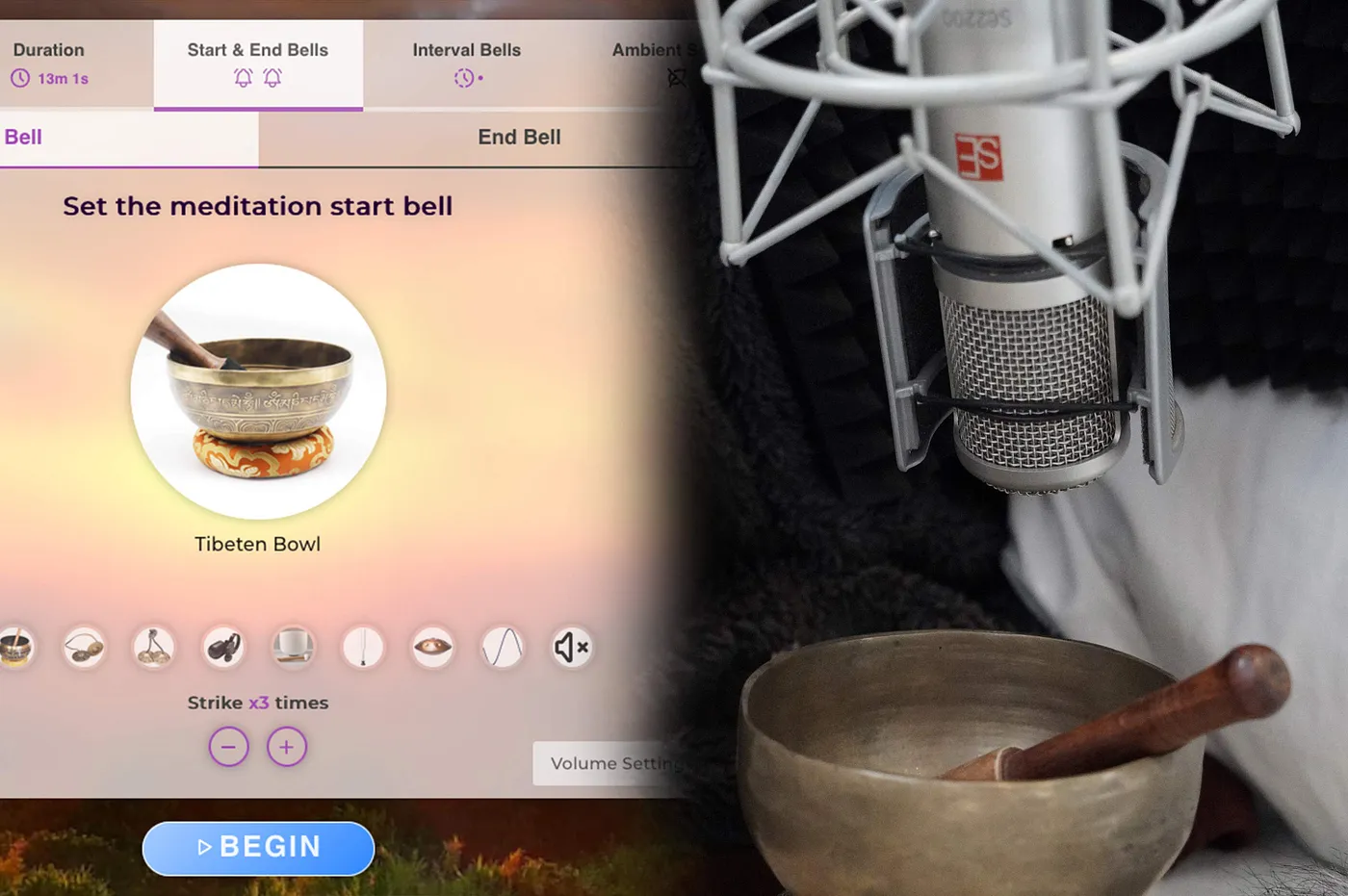
When you’re ready to build the daily habit, our free meditation timer is a clean bell and a clock.